CHEF logo
CHEF
Calculator for Health, Environment and Food
Free food calculator

Rate every dish for health and for climate, land and water.

From one recipe, CHEF works out a dish’s nutrition, Nutri-Score, traffic lights and allergens, and grades it A to E on all 16 environmental impacts the EU measures, not just carbon. Healthier menus and lower-impact menus usually turn out to be the same menus.

No sign-up to start2,500+ foodsNutrition labels for 10 marketsEU EF 3.1 method
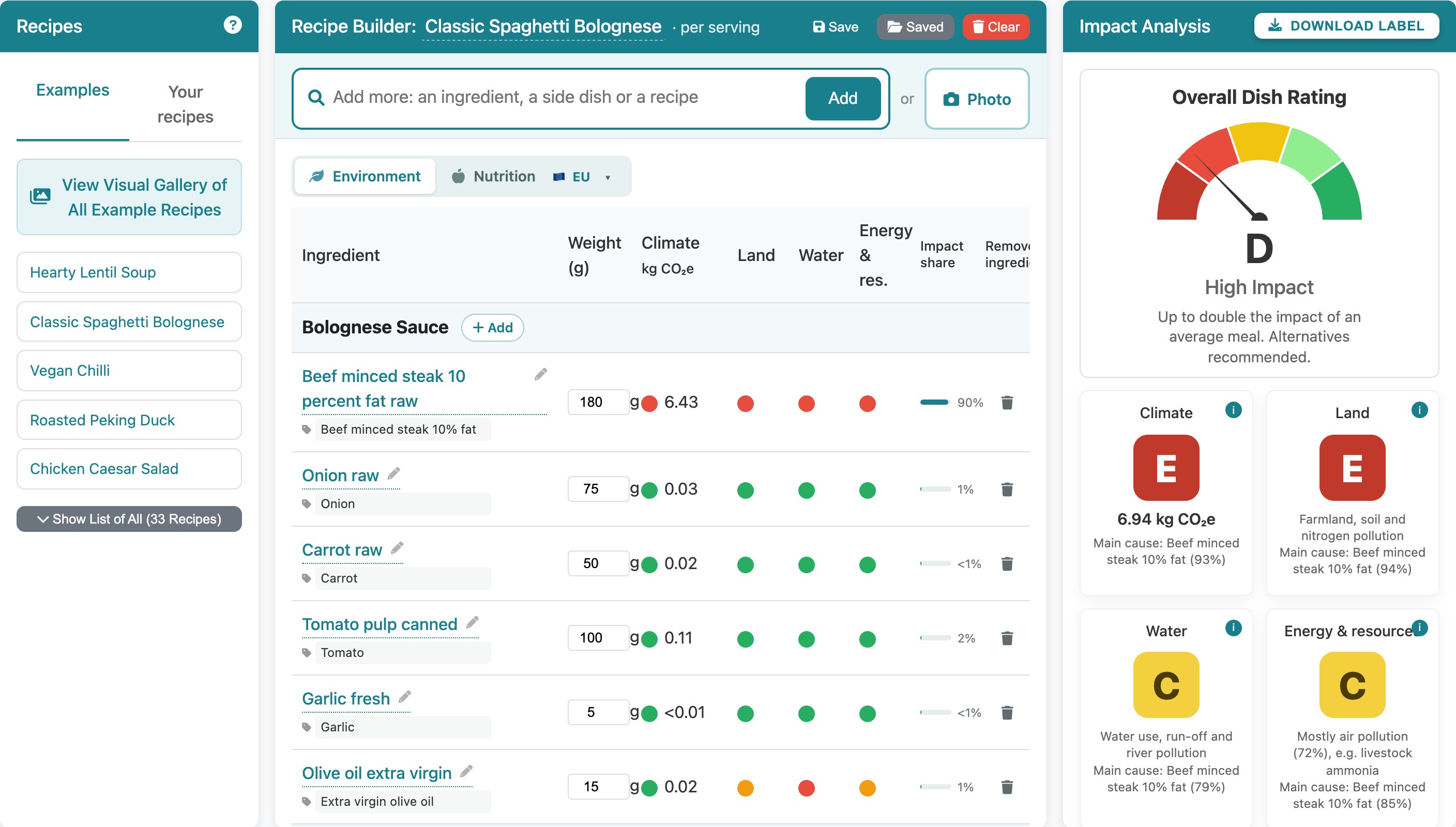
CHEF calculator: Classic Spaghetti Bolognese graded D overall, with Climate E, Land E, Water C and Energy and resources C

Who is CHEF for?

Hotels, restaurants & caterers

Head chefsF&B managersOwners & GMsContract caterers

Grade every dish on your menus, from breakfast buffet to banqueting, and give guests calories, allergens and simple A–E labels.

  • Calories, allergens and Nutri-Score per dish
  • A–E environment labels for guests
  • Cost, GP and carbon side by side
CHEF for hotels & restaurants →

Sustainability & reporting teams

Sustainability & ESG leadsProcurementConsultants

Food footprint data using the EU Environmental Footprint impact method (EF 3.1), for Scope 3, CSRD, nature reporting, tenders and specific claims.

  • Scope 3 food emissions, plus land and water
  • CSV exports and PDF certificates
  • Whole-venue assessment by TLC analysts
CHEF for reporting →

Students & lecturers

Cookery & cateringHospitalityNutritionEnvironmentApprentices

Free Pro for catering, hospitality and nutrition courses: analyse a dish’s nutrients, allergens, cost and impact in one place.

  • 57 nutrients and labels for 10 markets
  • Free with a college email or class code
  • Activities matched to your course
CHEF for education →
ChuGuru app icon

Eating out? Meet ChuGuru

Our free mobile app lets diners check the environmental and nutritional impact of their food before they order it.

Get it on Google Play Download on the App Store
Why the menu matters
49%
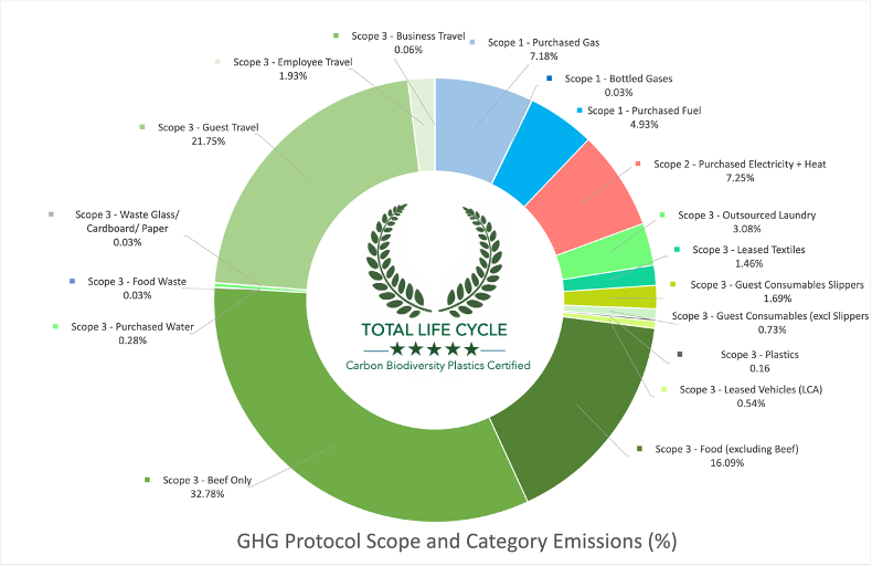
of Celtic Manor's 400+ room, 5-star hotel spa resort’s on-site emissions came from food and beverage, more than all its energy use combined.

A menu change needs no capital spending, can happen this season, and guests see it on the plate.

We have worked with leading hospitality, travel and healthcare organisations

Virgin Atlantic Hyatt Regency Great Ormond Street Hospital easyJet UN Tourism Jamaica Tourism Sustainable Markets Initiative Equinox St Thomas' Hospital The Celtic Collection Cooperativa Guatemala Global Travel and Tourism Resilience Council Cityscape Global
What makes CHEF different

Carbon is one impact. Your menu has sixteen.

CHEF scores all 16 EU Product Environmental Footprint indicators and turns them into one overall grade plus four that a kitchen can use. Land and water are where farming does most harm to nature, and a carbon figure never shows them.

ClimateGreenhouse gases, kg CO₂e
LandFarmland, soil and nitrogen
WaterScarcity, run-off and river pollution
Energy & resourcesFossil energy, minerals and air
How the grades work →
Nutrition and health

Good nutrition. Supports a healthier planet.

Most kitchens and catering courses think about nutrition first, and that is a good place to start. Research across 15 food groups found that the foods linked to better health, such as whole grains, fruit, vegetables, pulses and nuts, also have some of the lowest environmental impacts, while red and processed meat score badly on both (Clark et al., PNAS 2019). CHEF shows nutrition and environment side by side, so a healthier swap shows its environmental gain too.

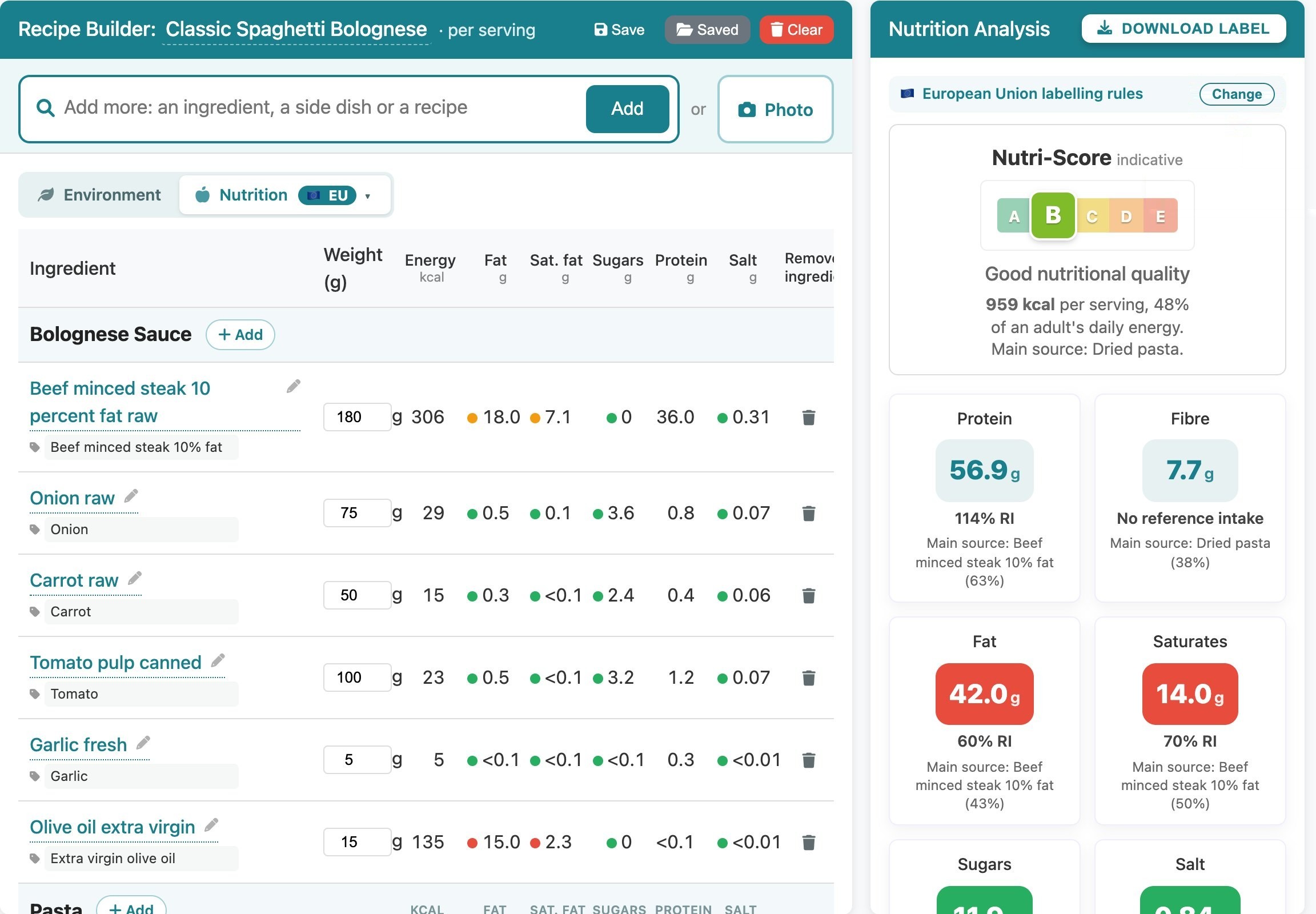
CHEF Nutrition tab: each ingredient's energy, fat, saturates, sugars, protein and salt per serving with UK traffic-light dots, and the dish's Nutri-Score
Nutrition for every dishEnergy, fat, saturates, sugars, fibre, protein and salt per serving, with % reference intake and the ingredient behind each. Pro adds 57 nutrients, including vitamins and minerals.
Front-of-pack scoresNutri-Score, UK traffic lights and the UK HFSS nutrient profile score, with Health Star Rating for Australia and New Zealand.
Calories and allergens on menusCalories per portion, as menus in England need them for businesses with 250+ staff, plus the UK/EU 14 allergens in bold.
Labels for 10 marketsEU, UK, US Nutrition Facts, Canada, Australia and New Zealand, Japan, China, Chile, Mexico and the Gulf, from one recipe.

Where they disagree, you see it. A sugary dessert can grade well for the planet, so CHEF never folds health into the environmental grade. You see both and decide. Nutrition values are indicative, calculated from Ciqual 2025 ingredient data.

How it works

Recipe to rating in three steps.

1

Add a dish or menu

Type a dish name, paste a recipe, photograph a menu or import a spreadsheet.

2

See what drives it

Nutrition per serving, an overall A–E grade, the four impact grades and the ingredient behind each one.

3

Label, compare, report

Download menu labels with calories, nutrition and allergens, compare dishes and export the data. User manual

Pricing

Free to start. £21 for the full picture.

CHEF Lite
£0

Overall and four impact grades, EU nutrition table, Nutri-Score, allergens and menu labels.

Start free
CHEF Pro
£21

12 months, no auto-renewal. All 16 indicators, 57 nutrients, labels for 10 markets, certificates and CSV exports.

Get Pro
TLC Certified
from £350

TLC analysts assess the whole venue: Scope 1, 2 & 3, biodiversity and plastics, with the TLC Certified badge.

Find out more

Student or lecturer? Pro is free. See CHEF for education →

Questions

Common questions

Is CHEF really free?

Yes. Lite is free with no sign-up to start, and a free account lets you download labels. Pro costs £21 for 12 months and is free for students and lecturers.

Is CHEF a nutrition calculator too?

Yes. Every dish gets its nutrition per serving, Nutri-Score, UK traffic lights, UK HFSS score and allergens, free. Pro adds 57 nutrients, labels for 10 markets and PDF certificates. Nutrition comes from Ciqual 2025 (ANSES) and is indicative, so check it against supplier specifications before printing.

Do healthier dishes have a lower impact?

Usually. Whole grains, fruit, vegetables, pulses and nuts are linked to better health and also have some of the lowest environmental impacts, while red and processed meat score poorly on both (Clark et al., 2019). There are exceptions, such as sugary foods, which is why CHEF shows nutrition and environment separately.

Why grade more than carbon?

Climate change is about a fifth of the EU’s weighting. Land use, water and nutrient pollution make up much of the rest, so a dish can be low-carbon and still score badly on land or water.

Where does the data come from?

Environmental data from Agribalyse 3.2 (ADEME) and nutrition from Ciqual 2025 (ANSES), combined with the EU Environmental Footprint 3.1 method. Full FAQ

Are the labels legally compliant?

Nutrition labels and allergens are indicative, calculated from ingredient data. Confirm them against supplier specifications before use. A–E environmental grades are CHEF’s own and are not certified, so read this before showing them to EU guests.

What grade is your signature dish?

Find out in under two minutes. Free, no sign-up to start.