Food & Beverage Environmental Impact Calculator

A professional tool to measure, label, and reduce the environmental impact of your menu.

Measure, label, and reduce the environmental impact of your menu.

Reduce Your Largest Controllable Emissions Source

Food & Beverage Operations can generate up to 50% of your on-site hotel & hospitality carbon footprint.
And can harm local eco-systems and biodiversity through water and land impacts.

The sustainability action that can achieve the largest reduction in your greenhouse gas emissions in the shortest time is adjusting menus and increasing guest awareness of the environmental impact of their food choices

The calculator empowers the hotel, restaurant and catering industry to identify the carbon, water and land environmental impacts of your menu options based on ingredients and portion size. Generate science-based environmental labels you can confidently display on your dishes.

  • Open Access: No sign-up required.
  • Science-Based: Utilises over 580,000 Life Cycle Assessment (LCA) variables across climate, land and water.
  • Comprehensive: Covers 2,800+ ingredients and dishes.
  • Quick start: Try our Example Recipes for instant Environmental Performance comparisons.
  • Globally Adopted: Thousands of dishes environmentally assessed across 145 countries.
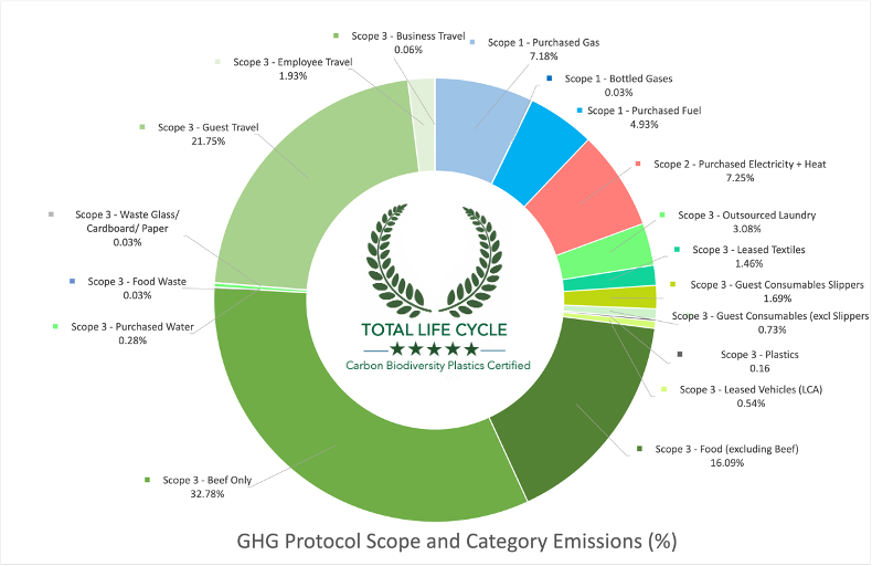
Chart showing Food and Beverage as the largest source of hotel emissions

Example emissions breakdown of a large European 5-star hotel spa resort, where F&B accounted for 49% of their emissions.

Sustainable Development Goals Climate Action logo. Sustainable Development Goals Life below Water logo. Sustainable Development Goals Life on Land logo.

Tackling carbon emissions is important, climate change is global and gradual. But your F&B water and land impacts are just as important, they are often local with immediate ecosystem and biodiversity consequences.

Menu Labels that Transform Guest Values into Premium Sales

Use the calculator to generate clear, environmental labels for your menus.

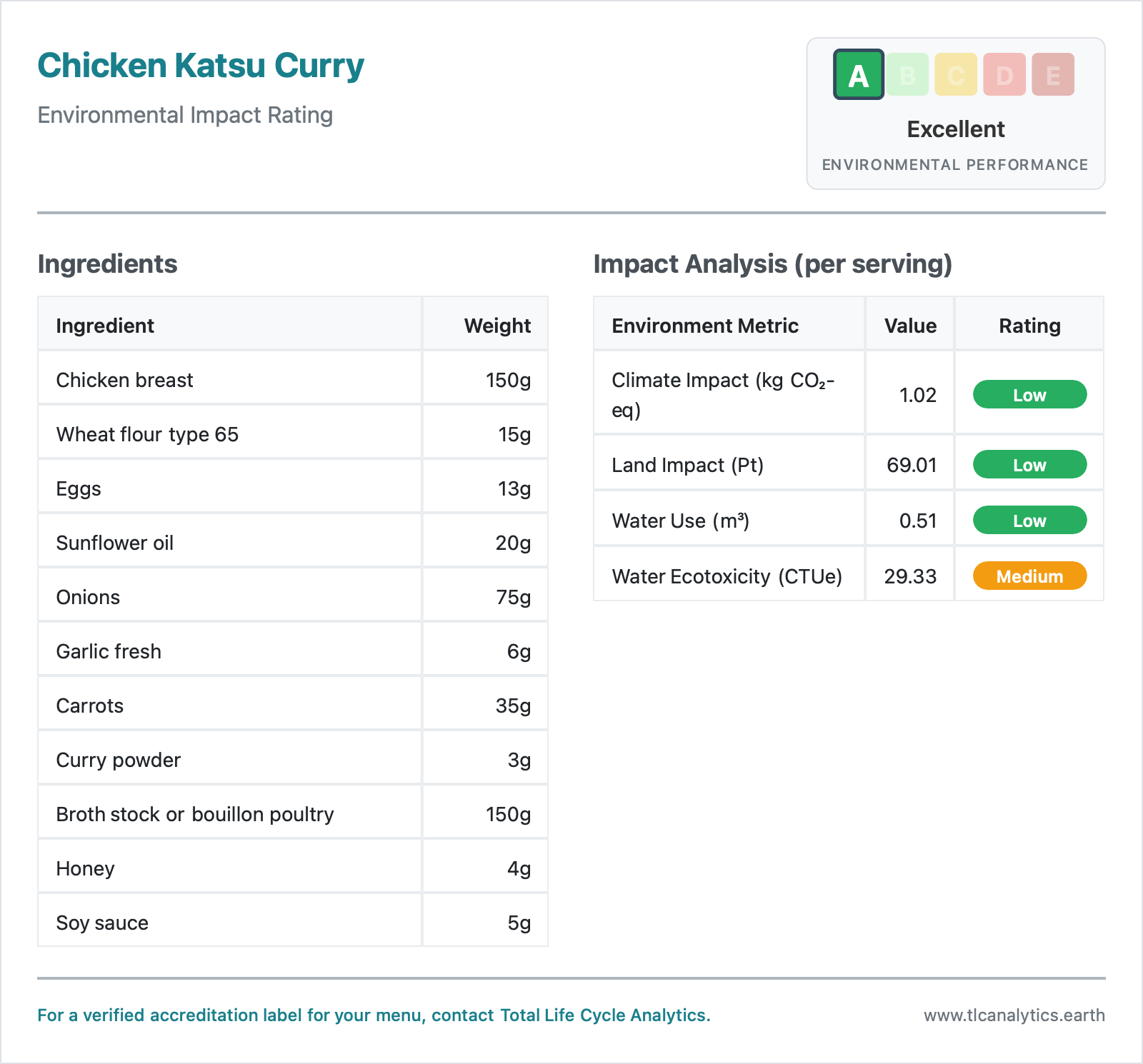
Empower guests with simple menu ratings (see example), backed by detailed, transparent data.

Improving Sustainability and your Business

Your guests care about sustainability and actively choose dining venues that align with their values. Environmental impact labelling responds to this demand, it enhances your brand, and drives guest preferences towards your premium planet-friendlier dishes.

"When environmental information on menus is provided, academic research and hotel groups such as the Hyatt and Hilton, have demonstrated that guests choose less nature harming options."

"PwC 20,000 consumer survey across 31 countries reports that 44% of consumers would pay a price premium for more sustainable foods."

By labelling your menu across carbon, land and water, you empower guests with informed choices, enhance their dining experience and demonstrate your holistic understanding of sustainability beyond just carbon.

How It Works: Video Tutorial

See how you can build a recipe, analyse its impacts, and find sustainable alternatives in just a few minutes.

Watched the tutorial and ready to go?     Launch the Food Calculator

Go Beyond the Menu: Certify Your Commitment

The calculator is the first step. Our professional services validate your operation's environmental performance, building guest trust and demonstrating leadership.

Why Get Certified by Total Life Cycle Analytics?

  • Third-Party Validation: Add credibility to your sustainability claims with science-based, Life Cycle Assessment verification.
  • Cost Effective: We know it's a tough time for hospitality so we have slashed prices for small businesses with less than 50 employees to under £400 for the restaurant package.
  • Comprehensive Analysis: We assess your entire footprint, including Scope 1, 2, and 3 emissions beyond just F&B aligned with the Greenhouse Gas Protocol categories and methods.
  • Full PEF LCA database: Full Life Cycle Assessment analysis of 16 Product Environmental Footprint datasets across land, freshwater, marine impacts, and human health.
  • Enhance Brand Reputation: Sustainable hospitality builds guest loyalty.
TLC Certified Logo


we have worked with

Understanding Our Foods Impact on Nature

Capture the wider environmental impacts of your F&B operations.

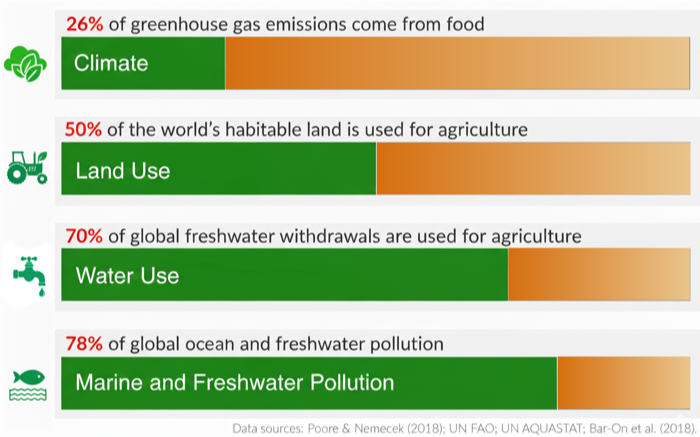
Chart showing the environmental impact of food on climate, land use, water use, and marine and freshwater pollution source-Our World in Data.

Go Beyond Carbon for Better Results

Our most immediate environmental challenges are climate change and biodiversity loss. Focusing on carbon emissions alone is only part of the sustainability journey. The livestock and arable farming systems that feed us are the single largest driver of environmental degradation globally, impacting our planet's most vital resources.

To make truly sustainable choices for your business and your guests, it's essential to consider the full picture of climate, land, and water impacts together.

"Chefs really care about the environment because good quality dining comes from sourcing excellent ingredients with great texture and taste. Poor environments and conditions creates bland food. A good chef rises to the challenges and enjoys the creativity needed to deliver a truly engaging dining experience that also takes better care of nature." ---- (Chef Monty, Sahana Restaurant and Bar)

Greenhouse Gases

Address the 26% of global greenhouse gas emissions that come from food by calculating the full carbon footprint of your dishes.

Water Impact

70% of freshwater extraction and 78% of ocean and freshwater pollution is related to farming. Understand the water impacts of your ingredients.

Land Impact

Review the land impacts that are leading to biodiversity and eco-systems losses locally and internationally.

Menu Labelling

Combine all impacts into an overall A-E rating to inform chefs, empower diners, and demonstrate your wider appreciation of nature across climate land and water.

in support and alignment with the

Greenhouse Gas Protocol

We follow the Greenhouse Gas Protocol Standards for the identification and measure of Scope 1,2 and 3 emissions

Glasgow Declaration

TLC is a signatory of the Glasgow Declaration. We agree on the five shared pathways to ensure climate action is aligned across the hospitality sector: Measure, Decarbonise, Regenerate, Collaborate, Finance.

UN Environment Programme

Environmental impacts financially modelled in alignment with UNEP research

UN Framework Convention on Climate Change

TLC is a signatory of the UN Framework Convention on Climate Change Pledge